Landing an SDE-2 role at a top tech company in India is a significant career leap, moving from writing code to shaping the systems that power millions of users. For engineers at firms like TCS, Infosys, or product startups, the High-Level Design (HLD) interview is the critical gatekeeper. It’s where you prove you can think beyond modules and APIs to design scalable, reliable, and maintainable architectures for real-world problems. This guide breaks down the exact process, frameworks, and resources you need to ace this interview and command that ₹30-60 LPA package.
What Exactly is a High-Level Design Interview?
Unlike low-level design, which focuses on class diagrams and specific algorithms, an HLD interview assesses your ability to design an entire system from a set of requirements. You're expected to identify core components, define their interactions, and justify your technology choices while considering scale, reliability, and cost. Interviewers at companies like Flipkart, Swiggy, Zomato, and Razorpay are not looking for a single "correct" answer. They are evaluating your thought process, your ability to handle ambiguity, and your knowledge of modern distributed systems principles.
A typical prompt might be: "Design a food delivery system like Swiggy" or "How would you architect a URL shortening service like Bitly?" The goal is to see if you can translate a business need into a technical blueprint.
Core Principles & System Design Fundamentals
Before diving into specific designs, you must internalize the foundational principles that guide every good architecture. These are the non-negotiable concepts you'll be judged against.
1. Scalability
This is the system's ability to handle increased load. You must understand the difference between:
- Vertical Scaling (Scaling Up): Adding more power (CPU, RAM) to an existing machine. Simpler but has a hard limit.
- Horizontal Scaling (Scaling Out): Adding more machines to your pool of resources. This is the preferred approach for modern web-scale systems and involves concepts like load balancers and distributed databases.
2. Reliability & Availability
- Reliability: The probability that a system will not fail over a specific period. It's about fault tolerance.
- Availability: The percentage of time a system is operational. Measured in "nines" (e.g., 99.9% availability). You'll need strategies like replication, redundancy, and failover mechanisms to achieve high availability, a must for consumer apps like Paytm or Zerodha.
3. Maintainability & Readability
Your design should be clean for other engineers. This involves:
- Modularity: Breaking the system into well-defined, loosely coupled components.
- Abstraction: Hiding complex implementation details behind simple interfaces.
- Documentation: Clearly articulating your design decisions on the whiteboard or virtual diagram.
The Step-by-Step Framework to Crack Any HLD Question
Follow this structured approach to avoid getting overwhelmed and to demonstrate a methodical thought process.
Clarify Requirements and Scope (The Most Critical Step): Never start designing immediately. Ask questions. What are the main features? What's the expected scale (users, requests per second)? What are the latency requirements? Should we focus on the read path or write path? For example, if asked to design Flipkart's product catalog, clarify if you should design the search functionality, the product page, or the inventory management backend.
Define the System's API Endpoints: Outline the core RESTful or gRPC APIs. This grounds your design in reality. For a chat application, key APIs could be
SendMessage(sender_id, receiver_id, content)andGetMessages(user_id, limit).Estimate the Scale (Back-of-the-Envelope Calculations): Use rough numbers to guide your technology choices. Estimate Daily Active Users (DAU), request volume, storage needs, and bandwidth. For instance, "If we have 10 million DAU and each user uploads 3 photos a day, we need to store 30 million images daily. Assuming 2MB per image, that's 60 TB of storage per day."
Draw the Core Data Model: Define the major entities (Users, Posts, Orders) and their relationships. Choose between SQL (for structured, transactional data) and NoSQL (for scalable, flexible schema). Justify your choice.
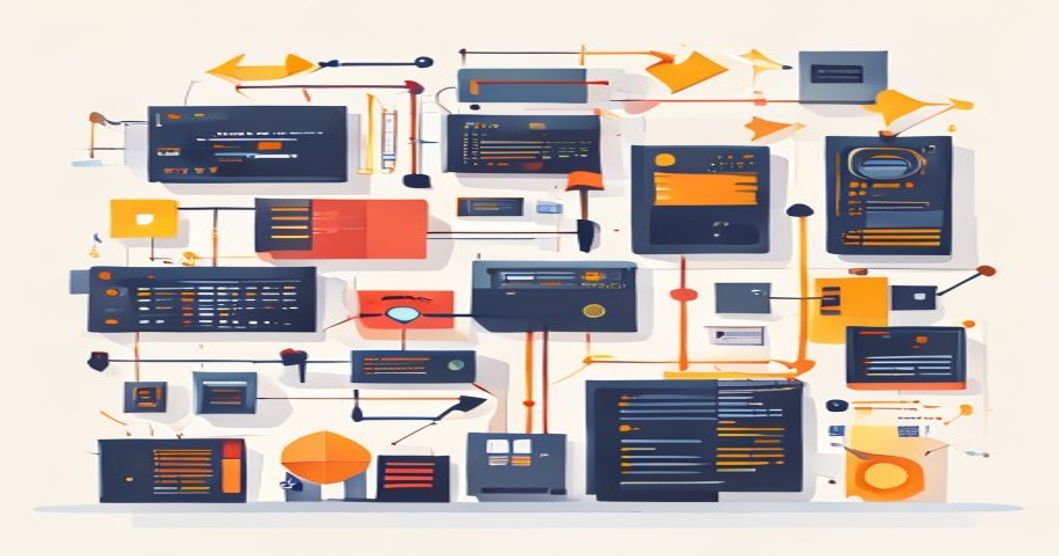
High-Level Component Diagram: This is the heart of your answer. Draw boxes for core services (User Service, Order Service, Payment Service), data stores, and third-party integrations. Show how they connect.
- Client → Load Balancer → Application Servers (Stateless)
- Application Servers → Caches (Redis/Memcached) → Databases (SQL/NoSQL)
- Message Queues (Kafka/RabbitMQ) for asynchronous processing (e.g., sending notifications, processing payments).
Deep Dive into Key Components & Trade-offs: Zoom into one or two complex parts. For a video streaming platform like YouTube, you might deep dive into:
- Video Storage & CDN: How will you store petabytes of video and serve them globally with low latency using a Content Delivery Network?
- Upload Processing Pipeline: How will you transcode videos into multiple formats (240p, 360p, 1080p) asynchronously?
Identify Bottlenecks and Discuss Scaling: How will each component scale? Discuss database partitioning (sharding), read replicas, caching strategies, and microservices decomposition if the monolith becomes too large.
Address Reliability, Security, and Cost: Proactively mention how you'd handle failures (retries, circuit breakers), secure data (authentication, encryption), and potentially optimize for cost (using different storage tiers).
Must-Know Components & Technologies for the Indian Context
While you don't need to know every tool's internals, you should be familiar with the standard building blocks and their use cases. Mentioning specific technologies shows practical knowledge.
- Databases: PostgreSQL (strong consistency, transactions), MongoDB (flexible schema, high read/write throughput), Cassandra (write-heavy, time-series data), Redis (in-memory cache & session store).
- Message Queues & Streaming: Apache Kafka (high-throughput, durable event streaming for microservices), RabbitMQ (traditional message broker for task queues).
- Cloud Providers & CDNs: While AWS (EC2, S3, RDS) is the global standard, know that Indian companies like Flipkart and Swiggy also use Google Cloud and Microsoft Azure. CloudFront (AWS) or Cloud CDN (GCP) are standard for static content delivery.
- Search: Elasticsearch is the go-to for complex, full-text search functionalities (e.g., product search on Myntra).
- Monitoring & Logging: Briefly mentioning tools like Prometheus (metrics) and the ELK Stack (Elasticsearch, Logstash, Kibana) for observability adds polish to your design.
How to Prepare: A 6-Week Study Plan
Cracking HLD requires consistent, focused study. Here’s a practical plan.
Weeks 1-2: Build the Foundation
- Master the fundamentals of scalability, caching, load balancing, and databases.
- Resources: Watch the Gaurav Sen and CodeWithHarry system design playlists on YouTube. Read the "System Design Primer" on GitHub.
Weeks 3-4: Learn Through Examples
- Study popular, well-documented designs. Don't just read—draw them yourself.
- Resources: Go through design blogs of Netflix, Uber, and Instagram. For Indian context, read engineering blogs from Flipkart, Razorpay, and Zomato. Practice standard questions: Design Twitter, Uber, BookMyShow, or a Payment Gateway.
Weeks 5-6: Mock Interviews & Active Recall
- This is the most crucial phase. Explain designs out loud.
- Resources: Practice with peers. Use platforms like Pramp or Interviewing.io. Follow Striver (takeUforward) for his structured problem-solving approach, which applies to design as well. Revisit and redraw your designs from memory.
Next Steps
The journey from SDE-1 to SDE-2 is about broadening your perspective from code to architecture. Start applying these principles today. To build complementary skills in low-level design and data structures, explore our curated DSA tracks. If you need to strengthen your core computer science fundamentals for interviews, check out these free courses on system fundamentals. Ready to practice? Browse all our interview preparation resources to structure your study plan.
Share this article
Keep learning on UnboxCareer
Explore free courses, certificates, and career roadmaps curated for Indian students.